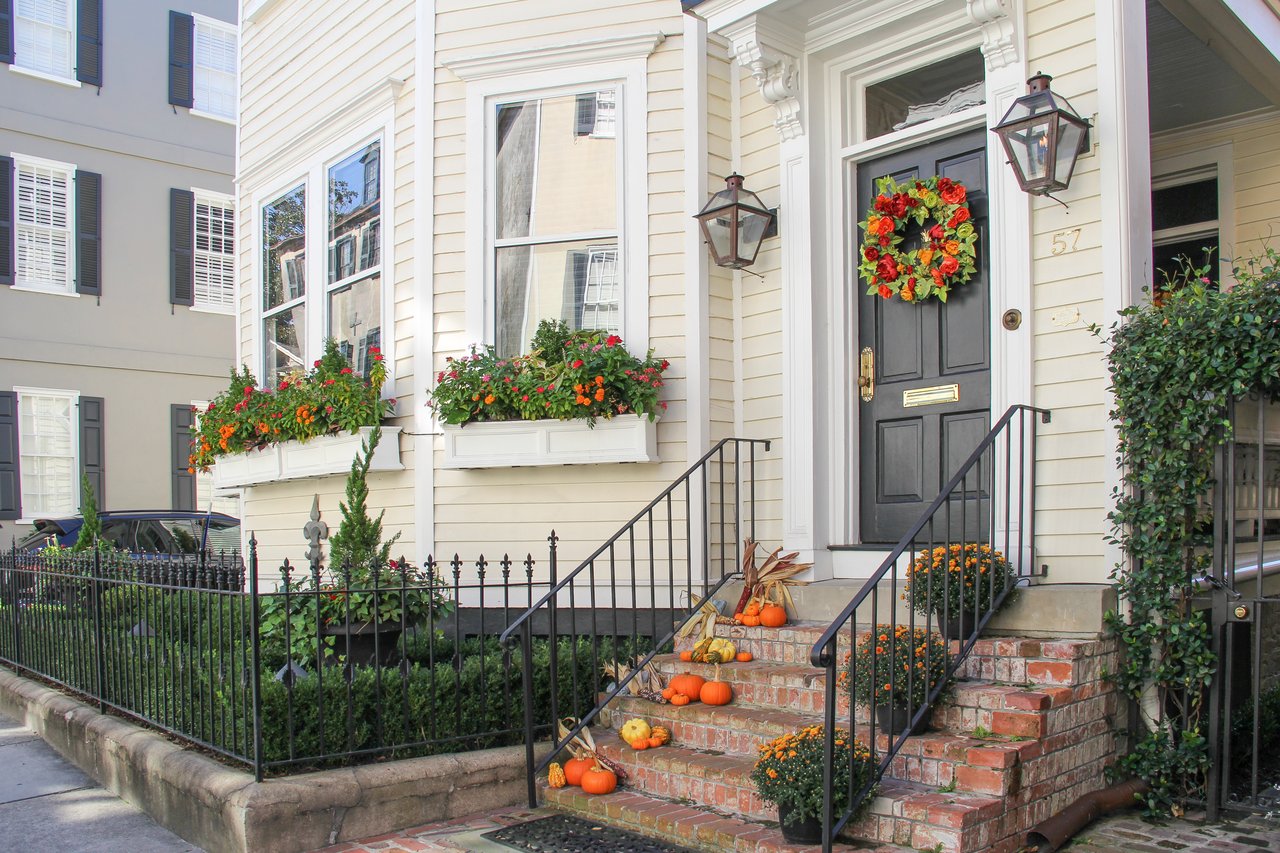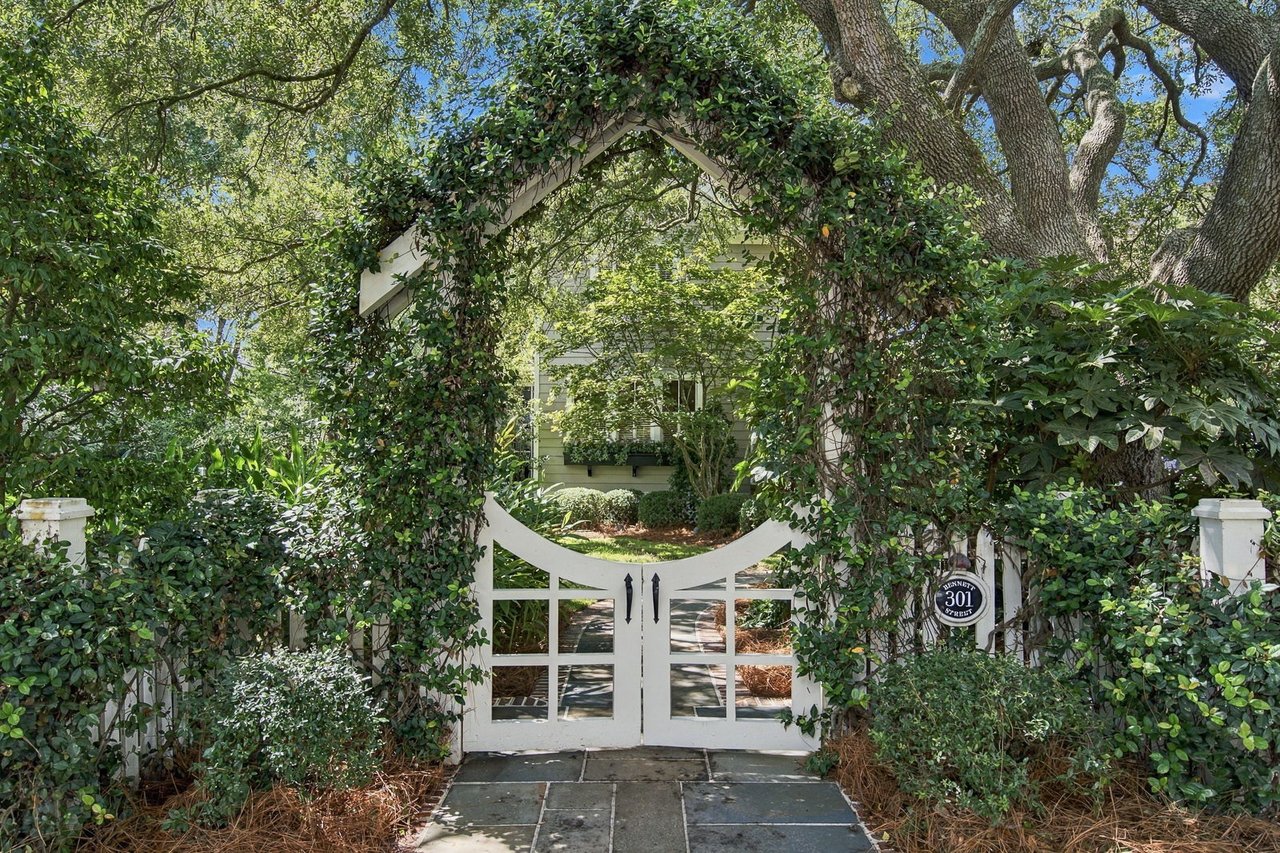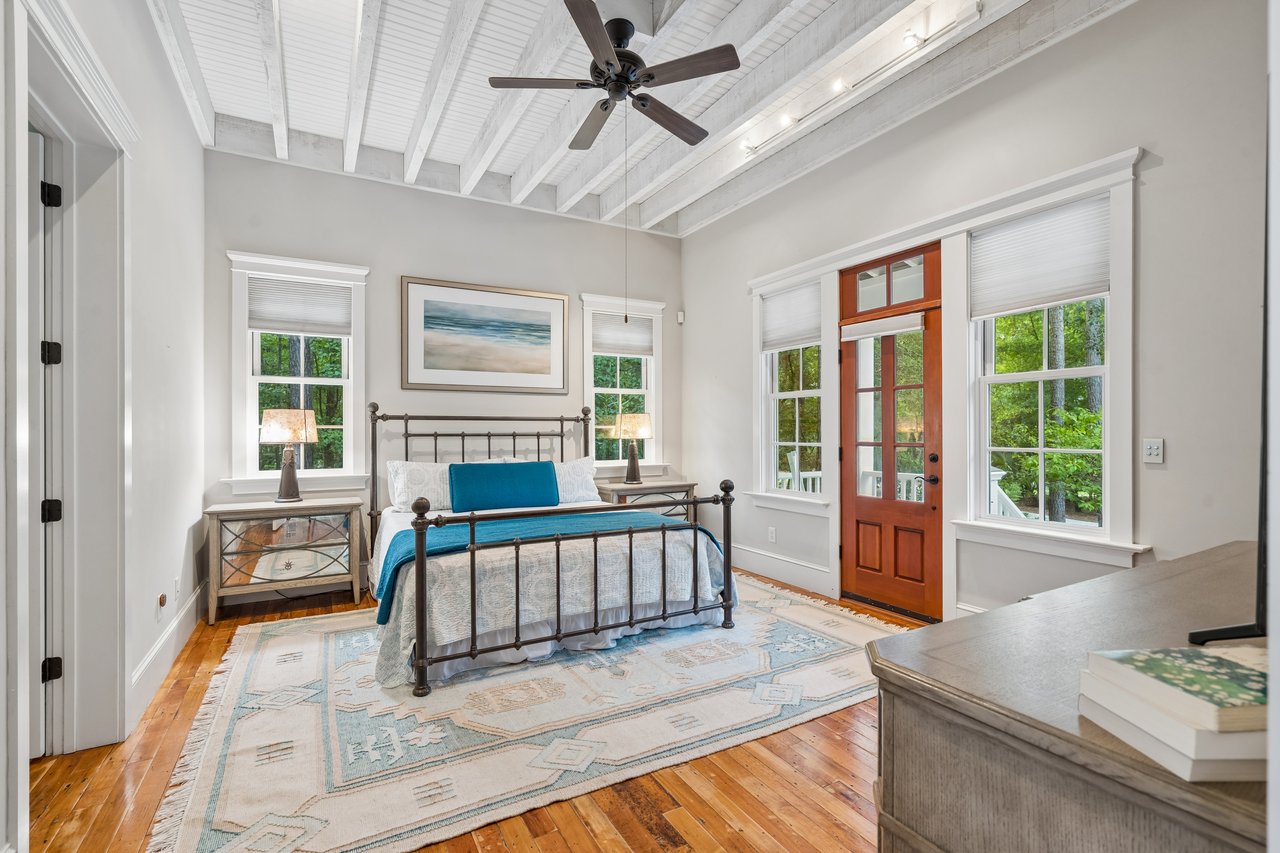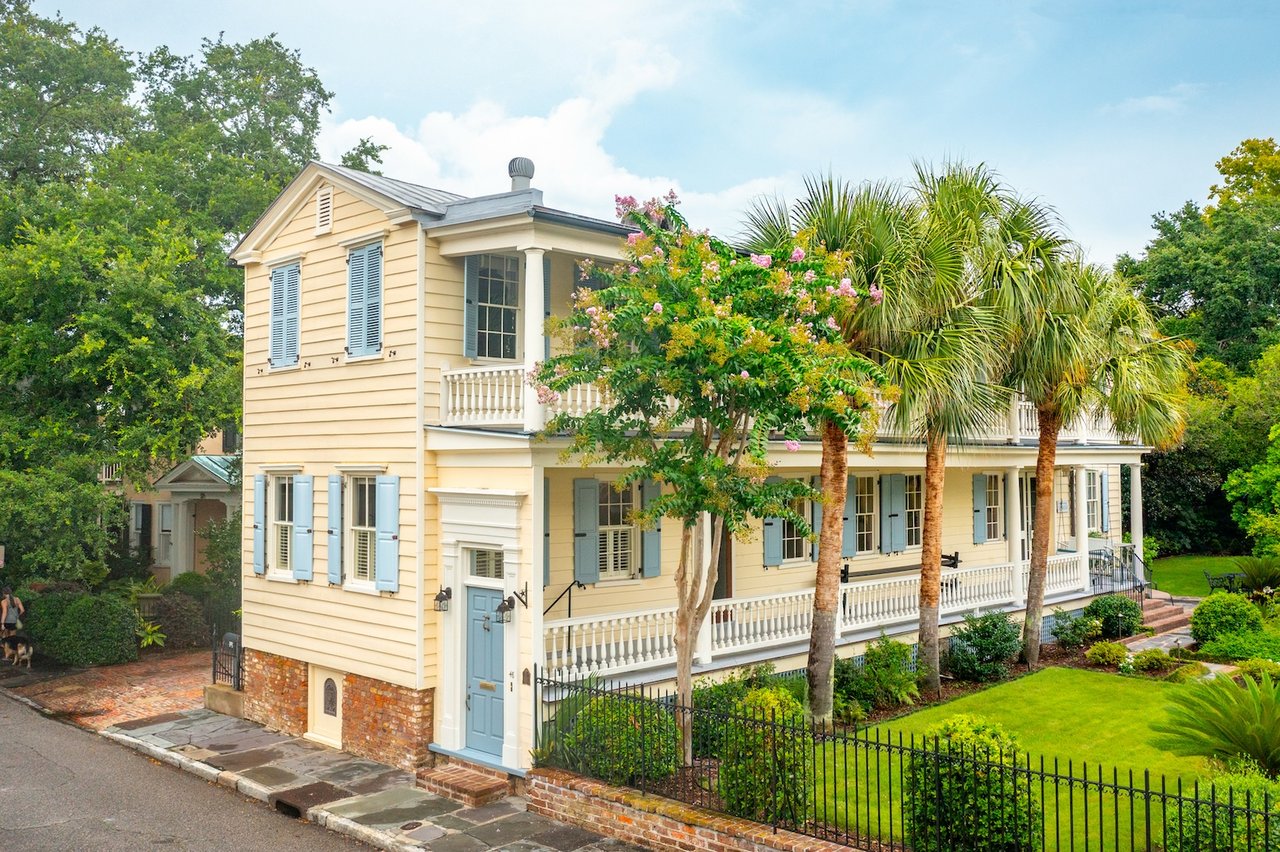
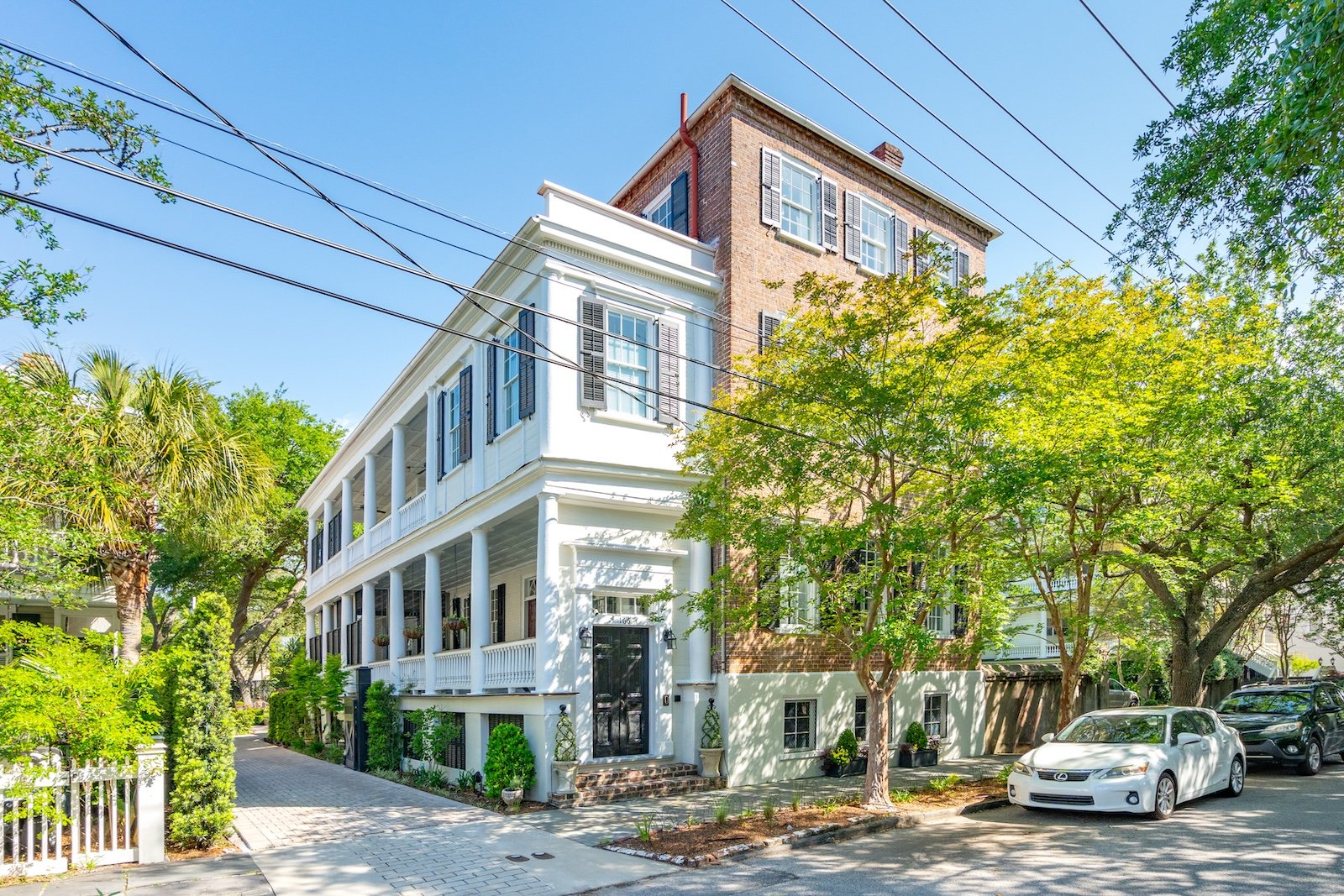
The Charleston Single House has been defining Charleston's architecture since the 1700s. Known for having at least two stories, with the narrow end facing outward toward the street, these charming homes are easy to spot as you stroll around town. The single house is typically associated with 18th century Charleston architecture, as it became the common residential form after the fire of 1740. Other defining architectural structures are piazzas facing the inside of the lot and chimneys and kitchens at the rear of the home. You'll often find that the ceilings of the piazzas are painted a light shade of blue. This traces back to the Gullah belief that this hue wards off restless spirits, while others believe the sky-like shade prevents insects from nesting.
Much study and discussion has focused on the origin of the single-house design. Architectural historians believe the layout was designed to counteract the hot and humid lowcountry summers, while also utilizing the limited space of an urban environment. The home's tall, narrow design helps air circulate through the piazzas and into the main rooms. The home's orientation gives residents privacy from city life, as they look out toward secluded gardens or pathways instead of bustling city streets. Historian Gene Waddell believes fire protection was the more considerable factor towards the rise of popularity, as separate, distinguished dwellings were less likely to spread fire in a dense urban setting than the paired homes of the colonial era, after a devastating fire swept through the waterfront district in 1740. The kitchen was often placed at the back of the home as well in case it caught fire, as it was less likely to spread throughout the rest of the home.
The Charleston single house is not only a staple of Charleston, but the South as a whole. Numerous historic examples can be found throughout the city: the Charles Elliott House at 43 Legare Street, 90 and 94 Church Street, the Robert Pringle House at 70 Tradd Street, the Simmons-Edwards House at 14 Legare Street and the Timothy Ford House 54 Meeting Street. Why not spend the morning exploring Charleston and see these charming homes for yourself?
Sources:
https://www.scencyclopedia.org/sce/entries/charleston-single-house/